
Learn Coordination through Martial Arts
Coordination—the ability to use different parts of the body together smoothly and efficiently—is an essential component of daily life and athletic performance. Whether you're catching a ball, dancing, or simply walking without tripping, good coordination makes movement easier and safer. One of the most effective (and often underrated) ways to improve coordination is through martial arts.
What Is Coordination in Martial Arts?
In martial arts, coordination refers to the seamless integration of physical movements with mental focus and timing. It's about making the body do what the mind commands—quickly, accurately, and under pressure. This involves:
- Hand-eye coordination (striking, blocking)
- Footwork and balance (moving while maintaining posture)
- Timing and rhythm (knowing when to move or counter)
- Spatial awareness (judging distance and angles)
How Martial Arts Enhances Coordination
- Complex, Repetitive Movements
Techniques in martial arts often involve intricate combinations of punches, kicks, blocks, and stances. Practicing these drills repeatedly wires the brain to execute them with precision, boosting neuromuscular coordination. Over time, these complex motions become second nature.
- Balance and Core Control
Martial arts emphasize stable stances and dynamic movement. Maintaining balance while kicking or shifting weight teaches your body to stay centred and aligned. This strengthens your core and enhances your ability to control movement.
- Focus and Reaction Time
Martial arts demand mental presence. Whether sparring with an opponent or flowing through forms (katas), practitioners must anticipate, react, and adjust on the fly. This constant engagement sharpens reflexes and strengthens the connection between brain and body.
- Cross-Lateral Movement
Many martial arts moves require the use of opposite limbs simultaneously—like a left-handed block with a right-handed punch. These cross-lateral actions enhance brain connectivity and coordination between the two hemispheres of the brain.
- Improved Proprioception
Proprioception is your body's ability to sense its position and movement in space. Through drills, partner work, and sparring, martial artists develop a keen sense of how their body moves, which leads to better posture, fluidity, and control.
Martial Arts Styles That Boost Coordination
- Taekwondo – Emphasizes kicks, balance, and flexibility.
- Boxing – Focuses on footwork, rhythm, and upper-body coordination.
- Brazilian Jiu-Jitsu – Involves ground techniques that demand fine motor control and body awareness.
- Karate – Features structured forms (katas) that enhance precision and sequencing.
- Capoeira – Combines dance-like movements with martial skills, perfect for developing rhythm and coordination.
For Kids and Adults Alike
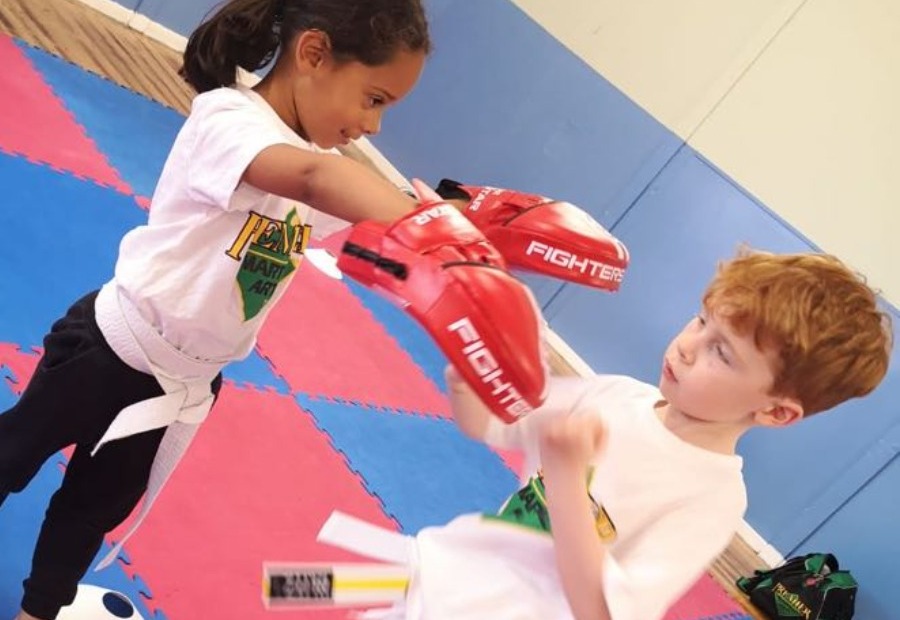
For children, martial arts is a fun and engaging way to develop motor skills, discipline, and confidence. For adults, it’s a powerful tool to maintain agility, cognitive function, and physical coordination—even as we age.
Conclusion: More Than Just Self-Defence
Martial arts offers far more than self-defence skills. It creates a strong foundation of physical intelligence—where body and mind work together in perfect sync. Whether you're a beginner or seasoned athlete, martial arts can help you move better, react faster, and live with greater balance and grace.
Here at Premier Martial Arts we teach a combination of the above styles to help in all areas of co-ordination, so give us a call on 07957877606 to put your co-ordination through the test
 rotherham karate
  rotherham kickboxing