Accuracy
Accuracy in Martial Arts
When people think of martial arts, they often imagine speed, power, or dramatic flying kicks. But beyond the flash and force lies one of the most important — and often overlooked — pillars of mastery: accuracy.
Accuracy is what separates a wild punch from a decisive strike, a sloppy kick from a surgical hit, and a flailing movement from a refined expression of skill. In martial arts, accuracy isn’t just about hitting your target — it’s about understanding your target.
What Accuracy Really Means
In martial arts, accuracy refers to the ability to deliver a technique precisely to a specific target area at the right time and distance.
It’s not only physical — it’s mental, tactical, and emotional.
Accuracy is the bridge between technique and effectiveness. A perfectly timed jab that lands on the chin is far more powerful than a haymaker that hits nothing but air. In essence:
“Power without accuracy is wasted energy.”
The Science Behind Accuracy
Every martial artist, from a beginner to a black belt, trains to control the body through coordination and awareness. Accuracy develops through:
Focus and Visualization – Before you can hit a target, you have to see it. Visualization sharpens your mind’s ability to direct your body with intention.
Muscle Memory – Repetition refines neural pathways, allowing techniques to become automatic and precise.
Timing and Distance – Understanding maai (Japanese for combat distance) helps a martial artist strike effectively without overreaching or exposing themselves.
Breath Control – A calm, centred breath allows smoother, more controlled movement — essential for consistent accuracy.
Accuracy Across Different Martial Arts
Each martial art interprets accuracy through its unique philosophy:
- Karate emphasizes pinpoint strikes to vital points (kyusho).
- Taekwondo focuses on high-speed, high-precision kicking.
- Boxing trains fighters to land clean shots while minimizing wasted motion.
- Jiu-Jitsu demands precise positioning and leverage for submissions
- Kendo rewards accuracy with points — only perfect strikes to valid targets count.
Regardless of the style, accuracy defines true control over one’s body and technique.
Training for Accuracy
Here are a few proven methods to develop precision in your practice:
Slow drills – Move at 50% speed to feel every motion and correct errors.
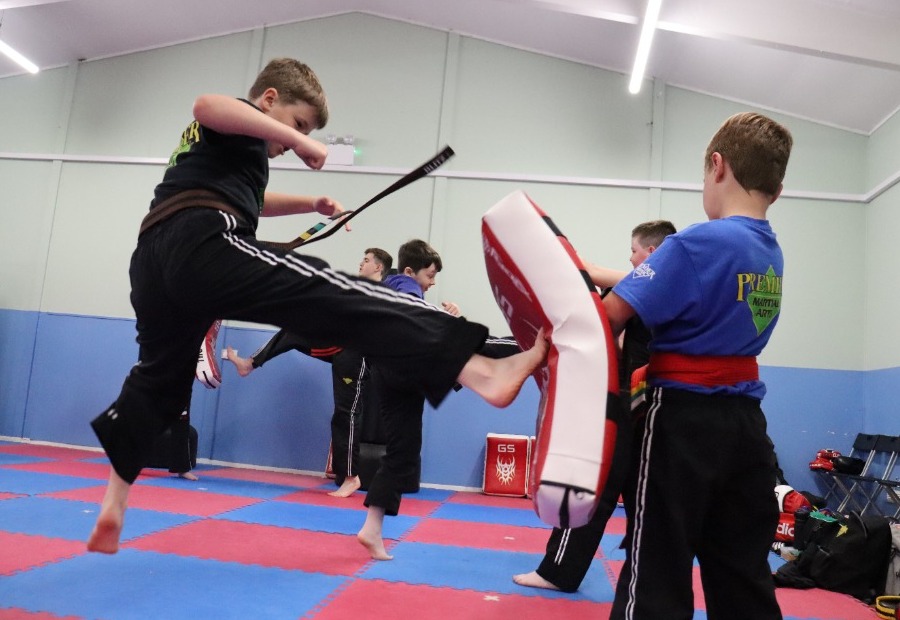
Target practice – Use focus mitts, heavy bags, or even coins or tennis balls suspended from strings.
Shadow training – Visualize your opponent and aim for specific points in the air.
Sparring feedback – Controlled sparring teaches how accuracy works under pressure.
Video review – Watching yourself helps identify missed targets and alignment issues.
The key is deliberate practice — slow, mindful repetition with feedback and correction.
Mindset: Calmness Creates Precision
Accuracy thrives in calmness. A tense body or anxious mind leads to sloppy technique.
The greatest martial artists exude serenity even in chaos — their strikes appear effortless because every movement is deliberate.
As Bruce Lee famously said:
“The successful warrior is the average man, with laser-like focus.”
Conclusion: Accuracy as a Way of Life
In the dojo and in life, accuracy reflects awareness, discipline, and presence. Whether you’re throwing a punch, making a decision, or speaking your truth — precision matters.
Training for accuracy is training for clarity — of body, mind, and purpose.
So next time you step onto the mat, remember:
Don’t just aim to hit.
Aim to hit right.